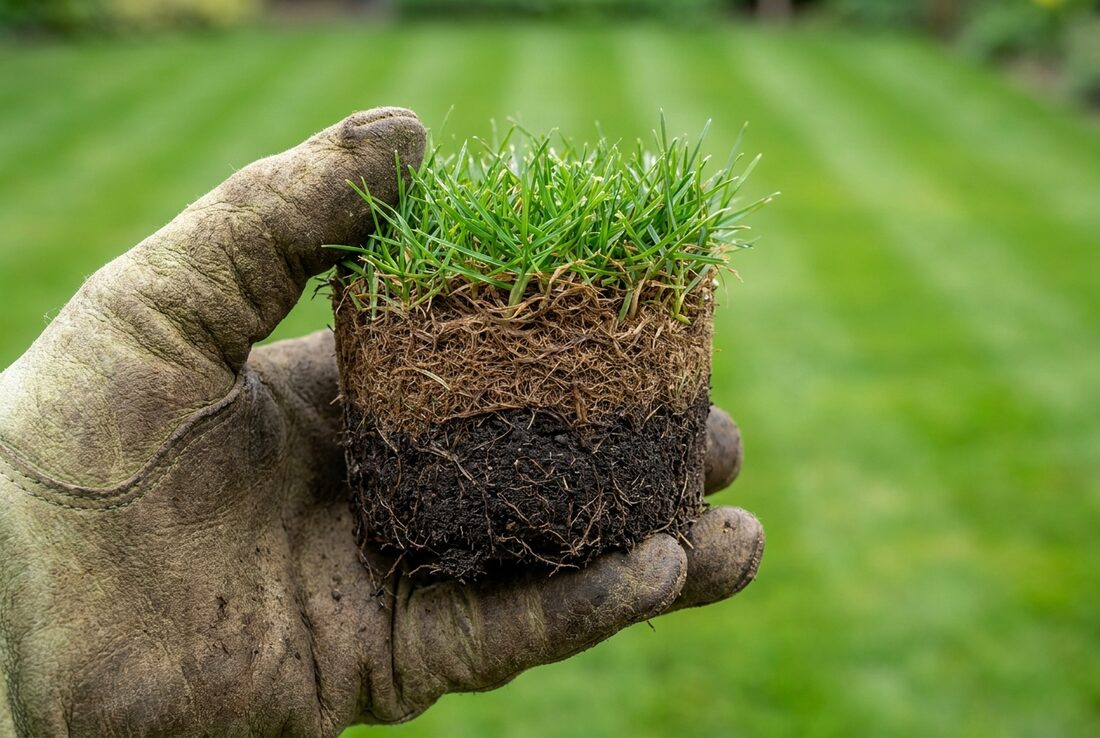
Thatch: how much is normal and when it becomes a problem
A little is good for a lawn. More than about 12mm and it stops your feed, water and everything else from reaching the roots.
If your lawn is being torn up overnight, the grubs are only half the problem. Here is how to tell what you have and what actually works.
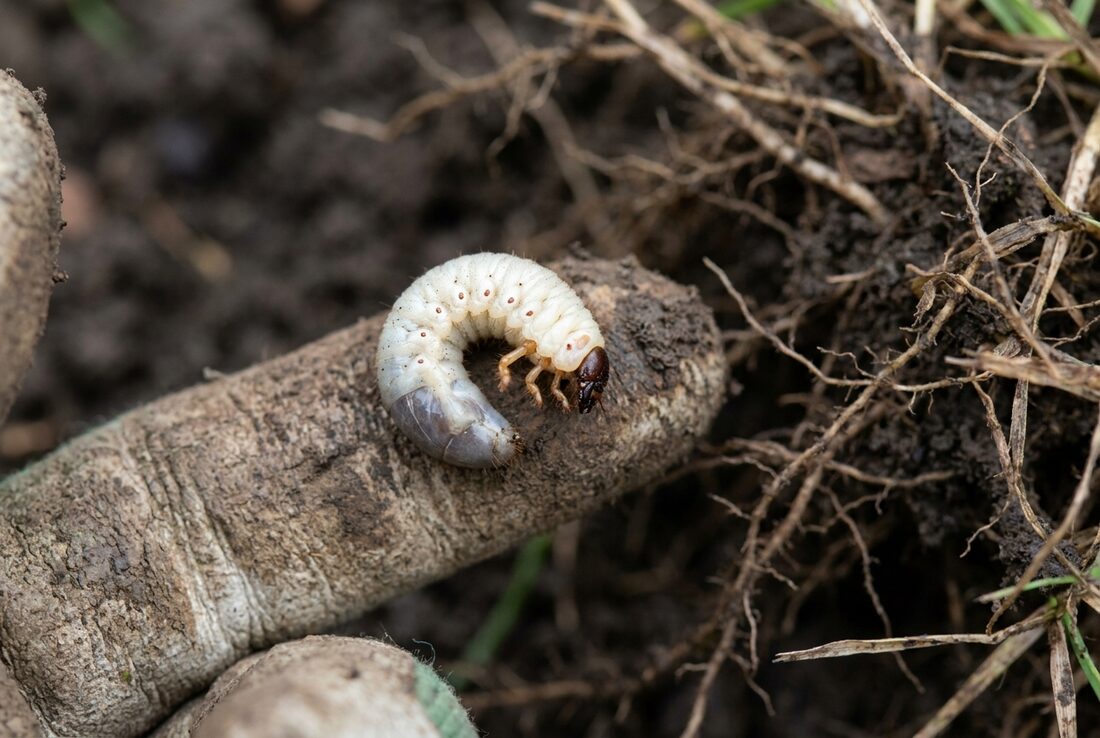
Chafer grubs are the fat, white, C-shaped larvae of the garden chafer beetle, and they live in the top few centimetres of soil eating grass roots. A moderate population causes patches that lift like a rug because there is nothing holding them down.
But the visible damage is usually not the grubs. It is badgers, foxes, crows and magpies tearing the turf apart to get at them, which they will do in a single night and repeatedly. If you have woken up to a lawn that looks rotavated, you have an animal problem caused by a grub problem.
Diagnosis is straightforward: cut three sides of a 30cm square, roll it back, and count. More than five grubs in that square is worth treating. Fewer than five and you are looking at something else, most likely leatherjackets, which are grey-brown and legless rather than white and curled.
What works is nematodes — microscopic parasitic worms watered onto the lawn in late summer when the grubs are small and near the surface. Timing is everything: mid-August to mid-September in Surrey, into moist soil, in the evening. Applied in October onto dry ground they do nothing at all, which is why most DIY applications fail.
A little is good for a lawn. More than about 12mm and it stops your feed, water and everything else from reaching the roots.
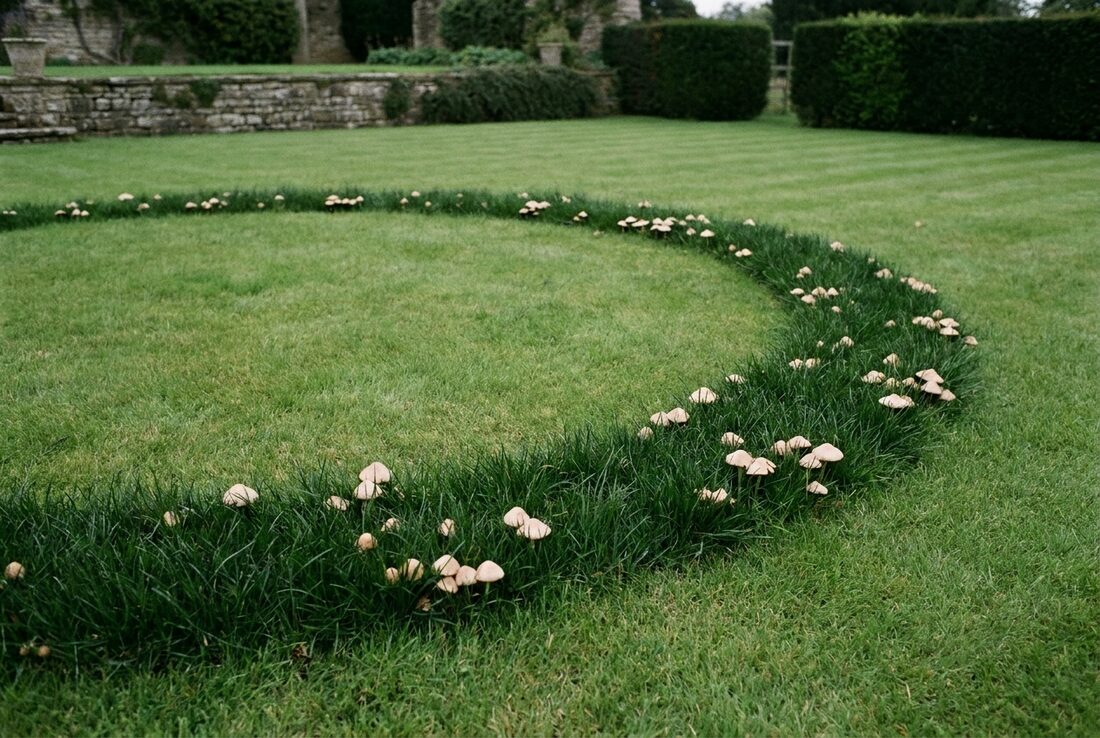
Dark green arcs, sometimes with toadstools, sometimes with dead grass. Three different types, and only one of them is really a problem.
Most lawn problems can be identified from a good photograph and a note of when it started. We will tell you what it is, free, whether or not you become a customer.