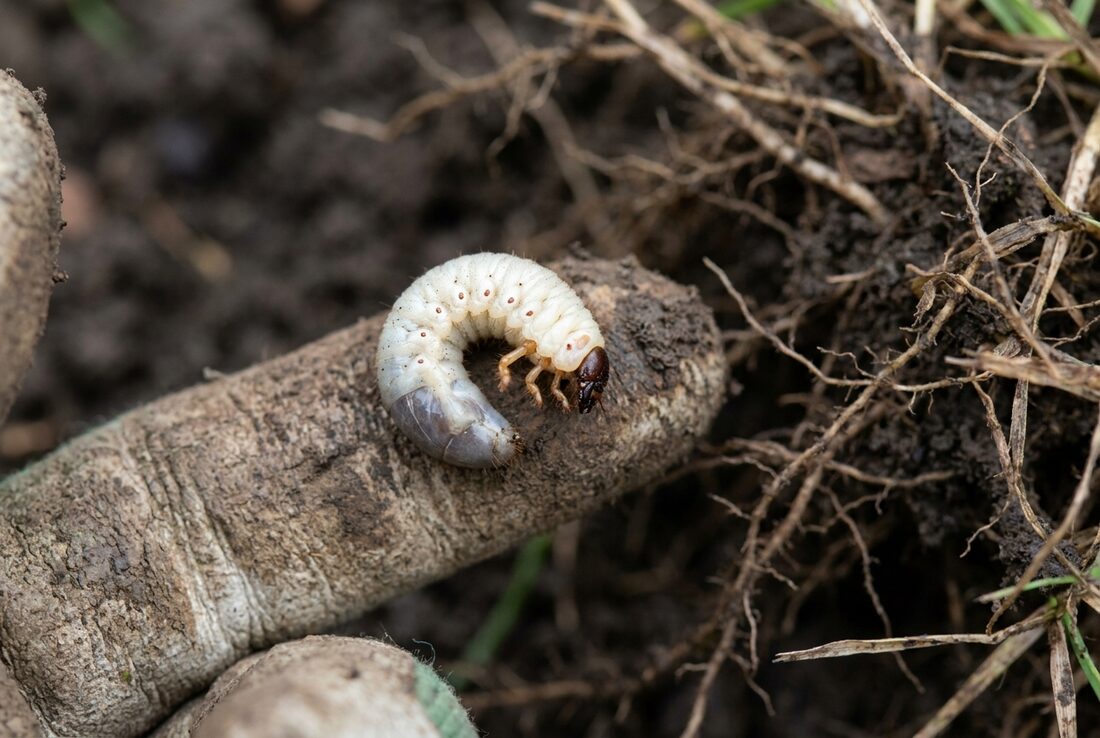
Chafer grubs: the damage is done by the birds
If your lawn is being torn up overnight, the grubs are only half the problem. Here is how to tell what you have and what actually works.
A little is good for a lawn. More than about 12mm and it stops your feed, water and everything else from reaching the roots.
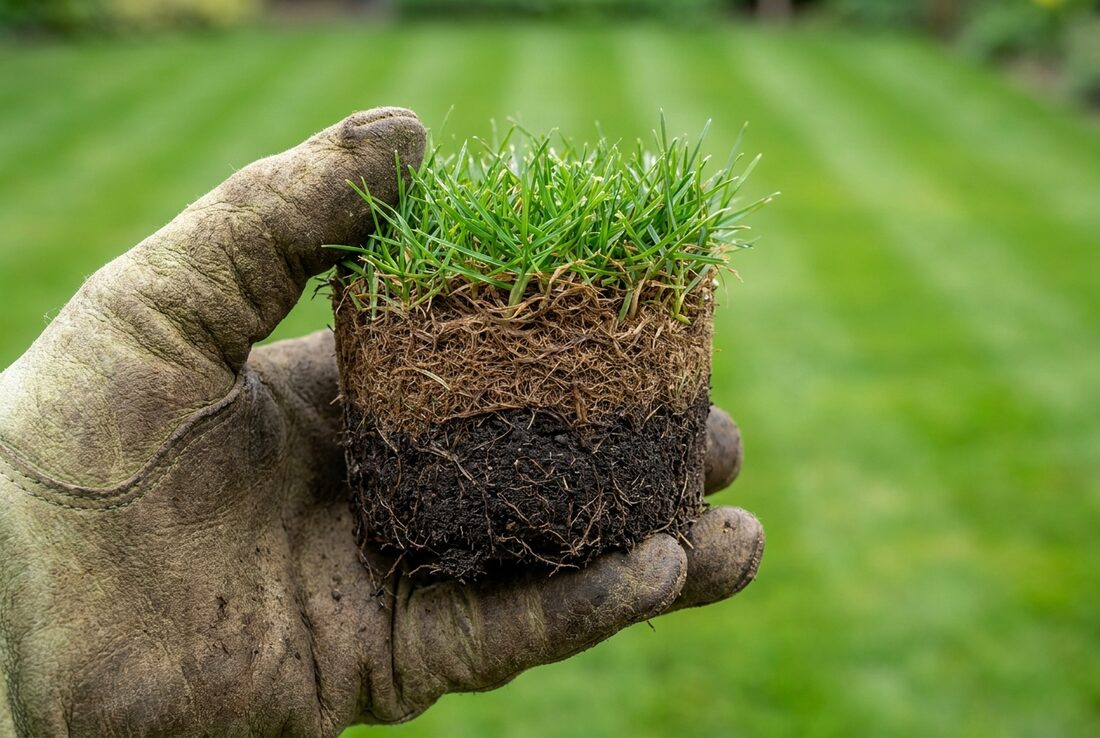
Thatch is the layer of dead and living organic matter between the green growth and the soil surface — old stems, roots and clippings that have not broken down. Every lawn has some, and a thin layer is actively useful: it cushions wear and moderates soil temperature.
The problem starts at about 12mm. Above that, water sits in the layer rather than passing through, feed is intercepted before it reaches the root zone, and the grass starts rooting into the thatch instead of the soil. That last part is what makes a thatchy lawn so fragile in drought — the roots are in a sponge that dries out in two days.
Check it the same way you check for grubs: cut out a small plug and look at the profile from the side. You will see the layers clearly. Anything over a centimetre of brown spongy material is worth acting on.
The fix is mechanical, not chemical. Scarification in autumn pulls it out. Nothing you spray on will remove an established thatch layer, whatever it says on the bottle, and the products that claim to are mostly selling you a wetting agent.
If your lawn is being torn up overnight, the grubs are only half the problem. Here is how to tell what you have and what actually works.
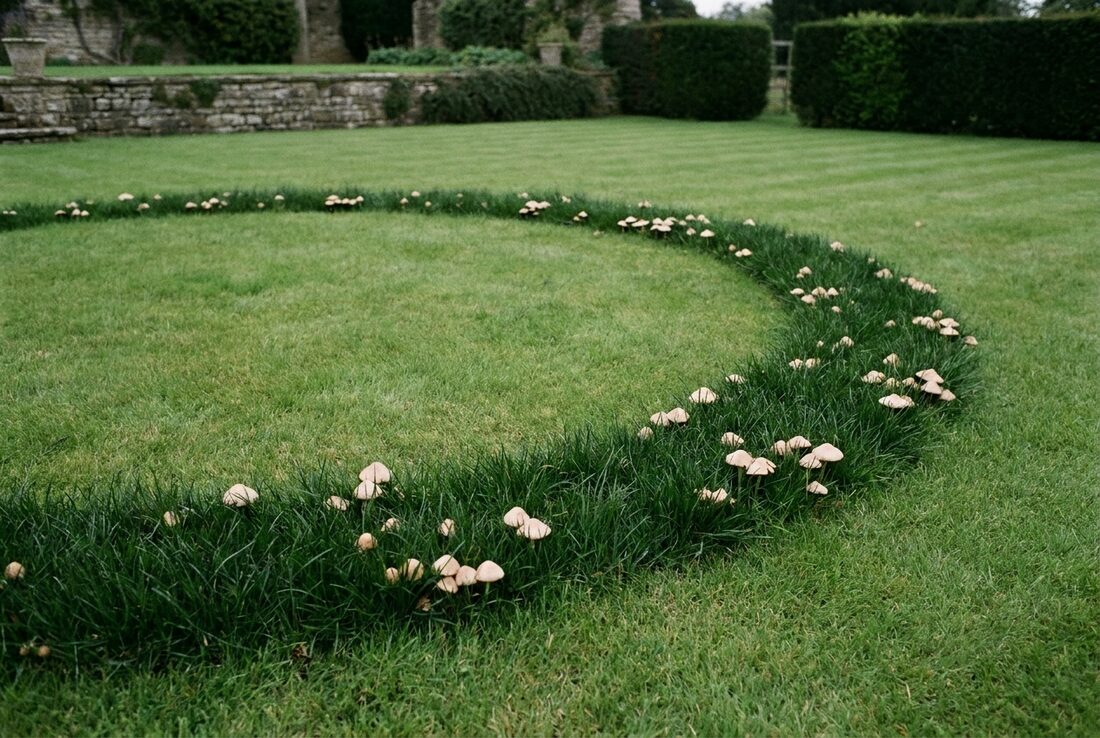
Dark green arcs, sometimes with toadstools, sometimes with dead grass. Three different types, and only one of them is really a problem.
Most lawn problems can be identified from a good photograph and a note of when it started. We will tell you what it is, free, whether or not you become a customer.